

Comparing High-Performance FFF Materials
ULTEM™ 9085, PEEK, PEEK-CF, and Victrex PEEK are four of the most capable high-performance FFF materials available for Fused Filament Fabrication (FFF). However, each offers a different balance of heat resistance, strength, chemical resistance, and certification, so some suit your application better than others. Below, we first explain what sets each material apart; then we compare them side by side to help you choose the right one for your part.
How Do They Compare?
In short, here is a quick side-by-side look at how these four high-performance FFF materials stack up against each other on the attributes that matter most when specifying a part.
| Attribute | ULTEM™ 9085 | PEEK | PEEK-CF | VICTREX™ AM™ 200 |
|---|---|---|---|---|
| Polymer family | PEI | PAEK | PAEK + carbon fibre | LMPAEK (low-melt PAEK) |
| Typical continuous use temperature | ~185°C | ~250°C | ~250°C+ | ~150–180°C (HDT) |
| Relative strength & stiffness | Good | Very good | Excellent (stiffest) | Very good |
| Chemical resistance | Very good | Excellent | Excellent | Excellent |
| Flame, smoke & toxicity (FST) | Excellent – aerospace-rated | Good | Good | Good |
| Biocompatible / medical-grade options | No | Yes | No | No |
| Dimensional stability when printed | Good | Good | Excellent (low warp) | Very good – optimised for FFF |
| Relative cost | High | High | Higher | Highest |
| Best suited for | Aerospace interiors & FST-critical parts | Medical devices, chemical & heat exposure | Structural parts needing maximum stiffness | Aerospace, automotive & robotics parts needing an easier-to-print PAEK |
Figures are typical/indicative for these high-performance FFF materials and vary with print orientation, parameters, and specific product grade. Get in touch for guidance specific to your application.
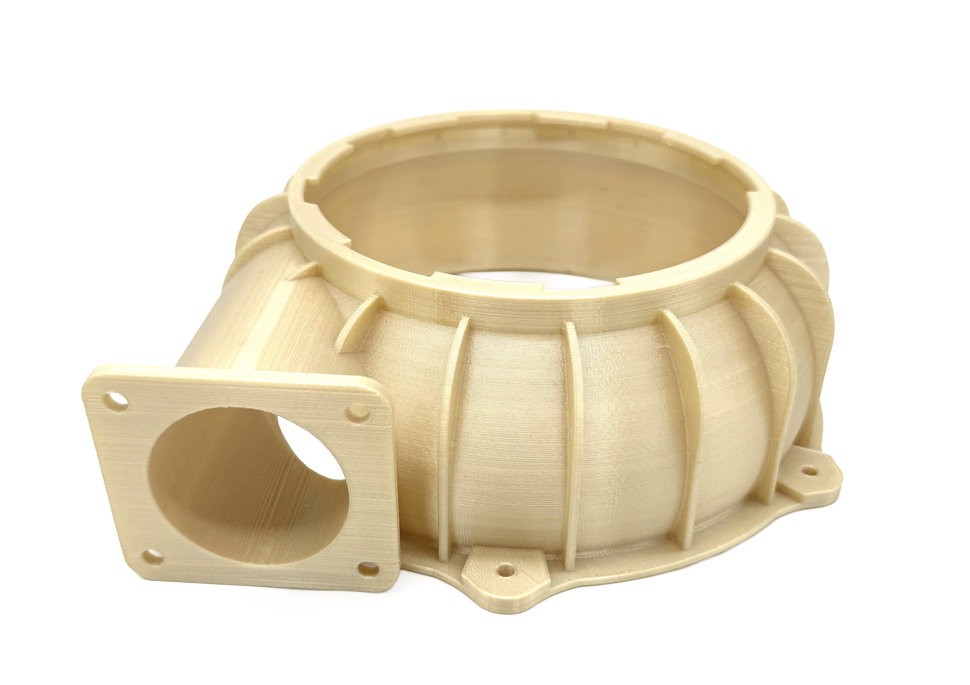
ULTEM™ 9085 (PEI)
Key properties
Specifically, ULTEM™ 9085 is a high-performance polyetherimide (PEI) thermoplastic that stands out for its outstanding strength-to-weight ratio and excellent flame, smoke, and toxicity (FST) characteristics, meeting the safety standards that aircraft interiors demand. In addition, it offers reliable performance at continuous operating temperatures of around 185°C, along with strong chemical resistance.
Best applications for high-performance FFF materials
As a result, these properties make ULTEM 9085 a natural fit for aerospace brackets, ducting, and interior components, as well as automotive under-the-hood parts, rail applications, and custom tooling or composite lay-up moulds where heat resistance and dimensional stability are critical.
PEEK
Key properties
Similarly, PEEK (polyetheretherketone) ranks among the most established high-performance polymers in engineering, combining excellent mechanical strength with outstanding chemical and hydrolysis resistance. Furthermore, it maintains its properties at continuous operating temperatures of around 250°C, and certain grades are biocompatible and sterilisable, which is why manufacturers trust PEEK for medical implants and surgical instruments.
Best applications
Beyond medical use, engineers widely specify PEEK across aerospace, automotive, and oil & gas applications, for example replacing metal components where a lightweight material must withstand sustained heat, aggressive chemicals, and repeated sterilisation or cleaning cycles.
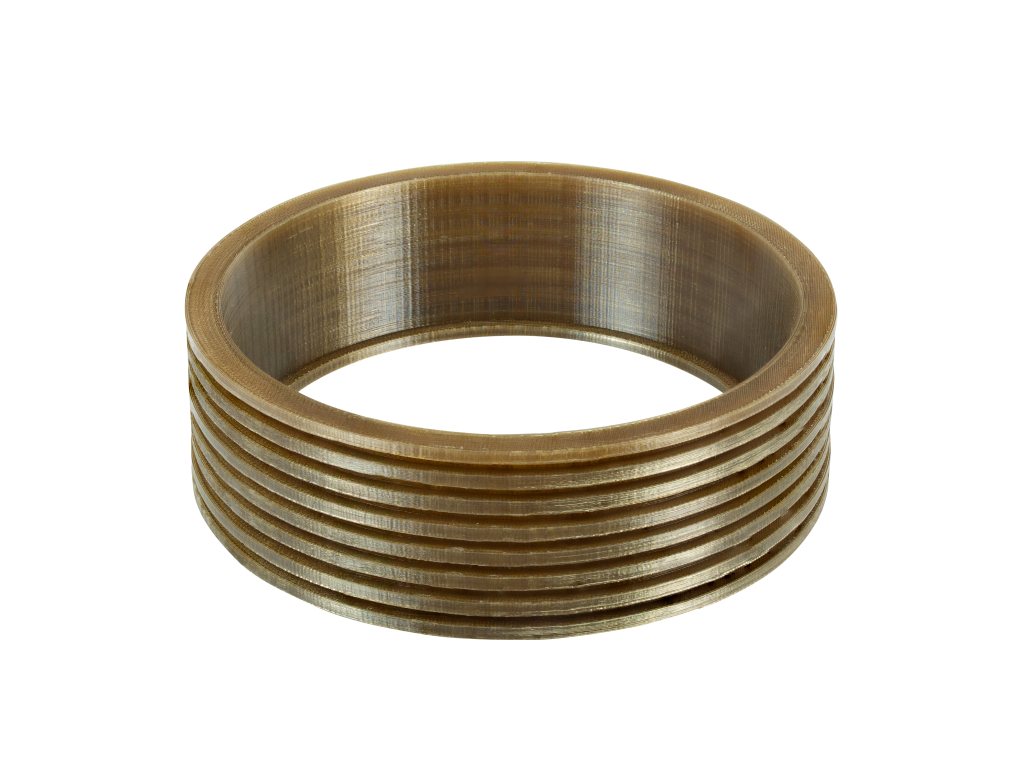
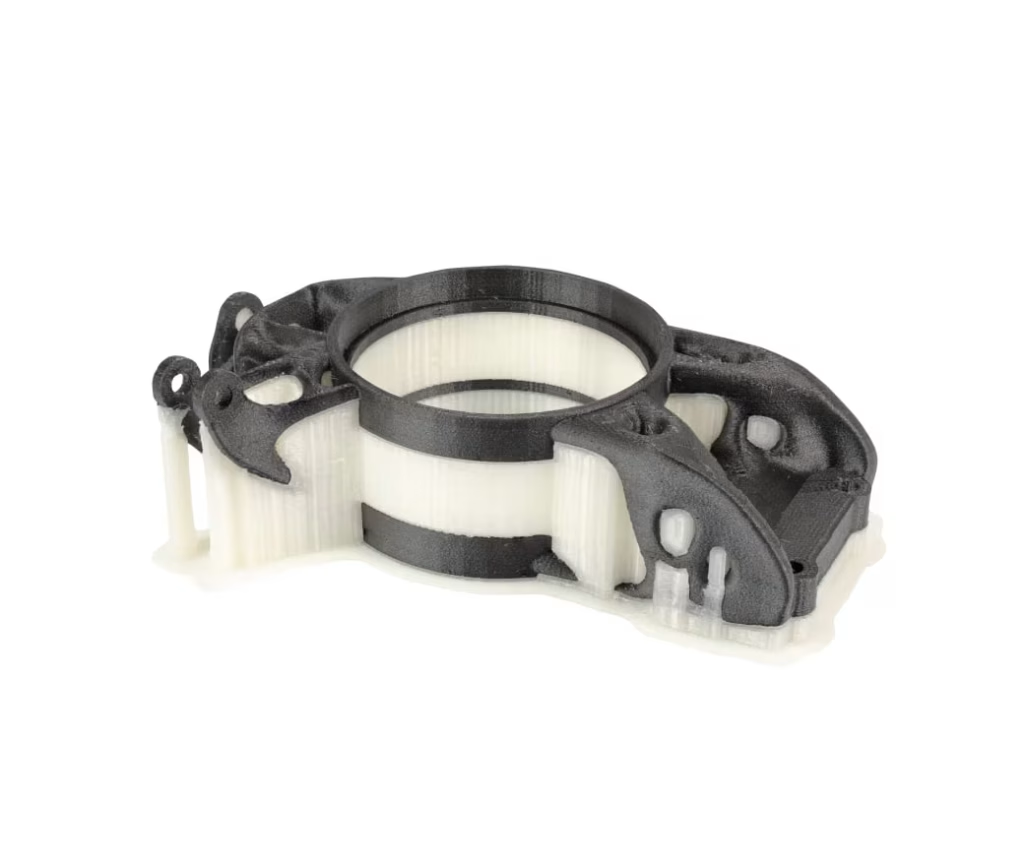
PEEK-CF (Carbon Fibre Reinforced)
Key properties
Notably, PEEK-CF takes the same high-performance base polymer and reinforces it with chopped carbon fibre, significantly increasing stiffness and strength while improving dimensional stability. As a result, the added fibre content reduces the coefficient of thermal expansion and lowers moisture absorption, so parts hold their tolerances more reliably in demanding conditions.
Best applications
Consequently, this combination of strength, stability, and chemical resistance makes PEEK-CF particularly well suited to aerospace and defence components, high-performance automotive structural parts, chemical-resistant equipment for oil & gas, and precision tooling for semiconductor manufacturing.
HP 3D Filament VICTREX™ AM™ 200
Key properties
Meanwhile, Victrex developed HP 3D Filament VICTREX™ AM™ 200 as a PAEK-based filament — specifically a low-melt PAEK (LMPAEK) — engineering it at the molecular level for fused filament fabrication, rather than adapting it from an injection-moulding grade. As a result, that AM-specific chemistry fuses more readily between layers, giving stronger interlayer bonding, lower warping, and more consistent, repeatable parts than standard PEEK filaments.
Best applications
For example, typical printed properties include a tensile strength around 95 MPa and a heat deflection temperature in the region of 150–180°C, alongside PAEK’s characteristic chemical resistance. That combination suits aerospace and automotive components, industrial robotics, and electronics and semiconductor equipment — though, unlike Victrex’s implant-grade PEEK-OPTIMA range, Victrex has not certified this AM-specific grade for medical implant use.
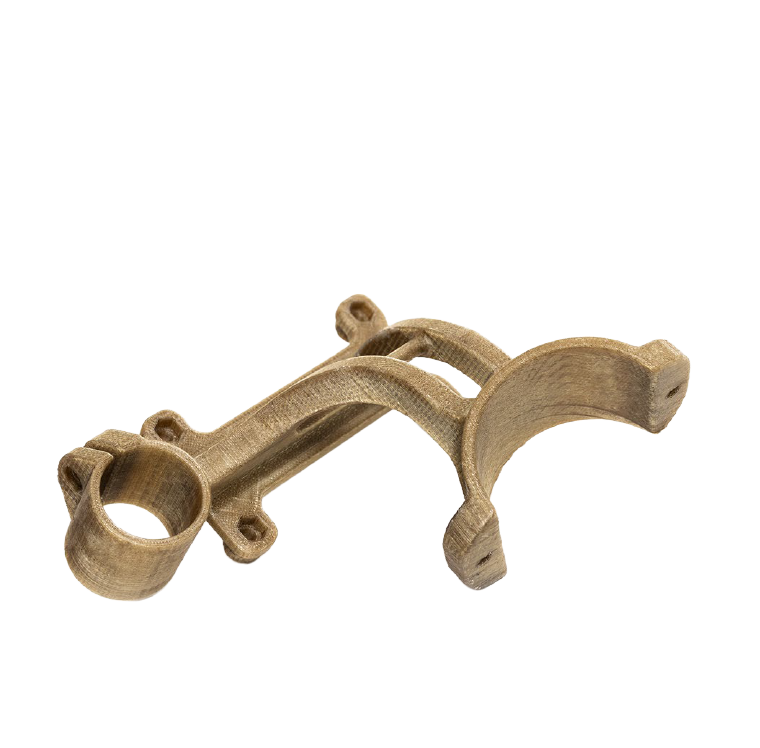
Talk to Us About Your High-Performance Part
Whether you need aerospace-grade FST compliance, medical biocompatibility, or chemical resistance for harsh environments, our FFF 3D printing team can help you choose the right high-performance FFF materials and process for your application.